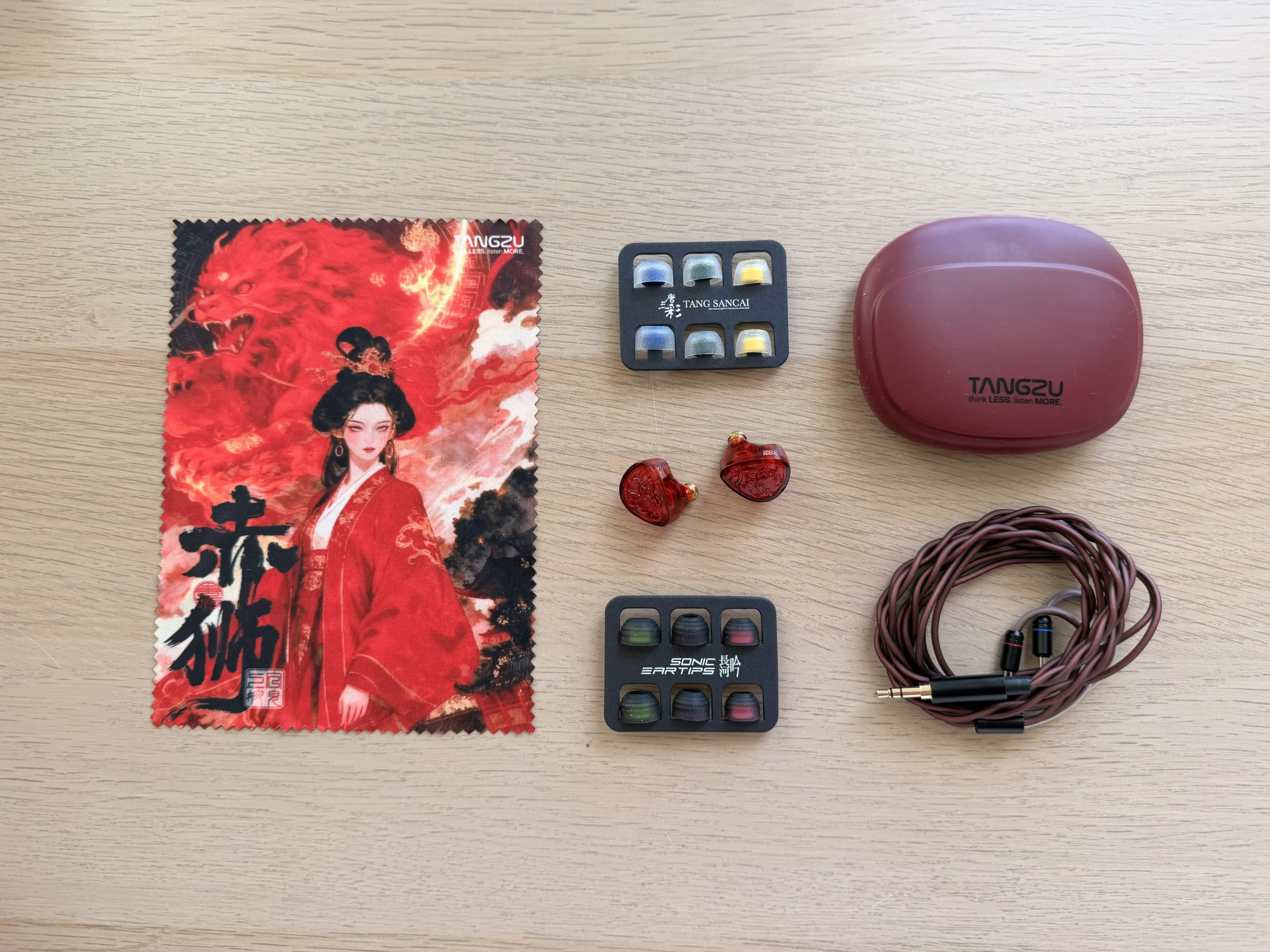
The Tangzu Wan’er series has been a favorite among budget audiophiles for good reason. Now Tangzu has released the Wan’er 2 Red Lion Edition, a bassier and warmer take on the original formula. At just $23, this IEM aims to deliver more punch and musicality while maintaining the value proposition that made the original popular. After extensive testing with various sources and music genres, here’s my complete assessment of whether this red variant deserves a place in your collection.
Tangzu Wan’er 2 Red Lion Specifications
| Specification | Details |
|---|---|
| Price | $23 USD (₹1,900 approximately) |
| Driver | Single Dynamic Driver with Enhanced PET Diaphragm |
| Cable | 2-Core OFC with Monocrystalline Silver Enamel |
| Impedance | 20 Ohms |
| Sensitivity | 113.5 dB |
| Design | Red PET Shell with Jade-like Texture |
| Named After | Shangguan Wan’er (Chinese poet and official) |
Performance Ratings
Design & Aesthetics: ⭐⭐⭐⭐⭐ (5/5)
Build Quality: ⭐⭐⭐⭐ (4/5)
Sound Quality: ⭐⭐⭐⭐ (4/5)
Gaming Performance: ⭐⭐⭐½ (3.5/5)
Soundstage: ⭐⭐⭐½ (3.5/5)
Overall Value: ⭐⭐⭐⭐½ (4.5/5)
Jump to Section:
Quick Verdict
The Tangzu Wan’er 2 Red Lion Review transforms the balanced original into a more engaging, bass-forward experience. The U-shaped tuning with warm tonality makes this version more musical and fun, though it sacrifices some vocal accuracy in the process. At $23, the presentation is impressive with excellent packaging, premium cable, and beautiful aesthetics. The strong bass, rich midrange, and bright yet controlled treble create an enjoyable listening experience, especially for hip-hop, EDM, and instrumentals. However, some vocal incoherency and the warmer presentation may not suit everyone. If you want a more exciting sound signature than the neutral original Wan’er, the Red Lion delivers excellent value.
Unboxing and Presentation
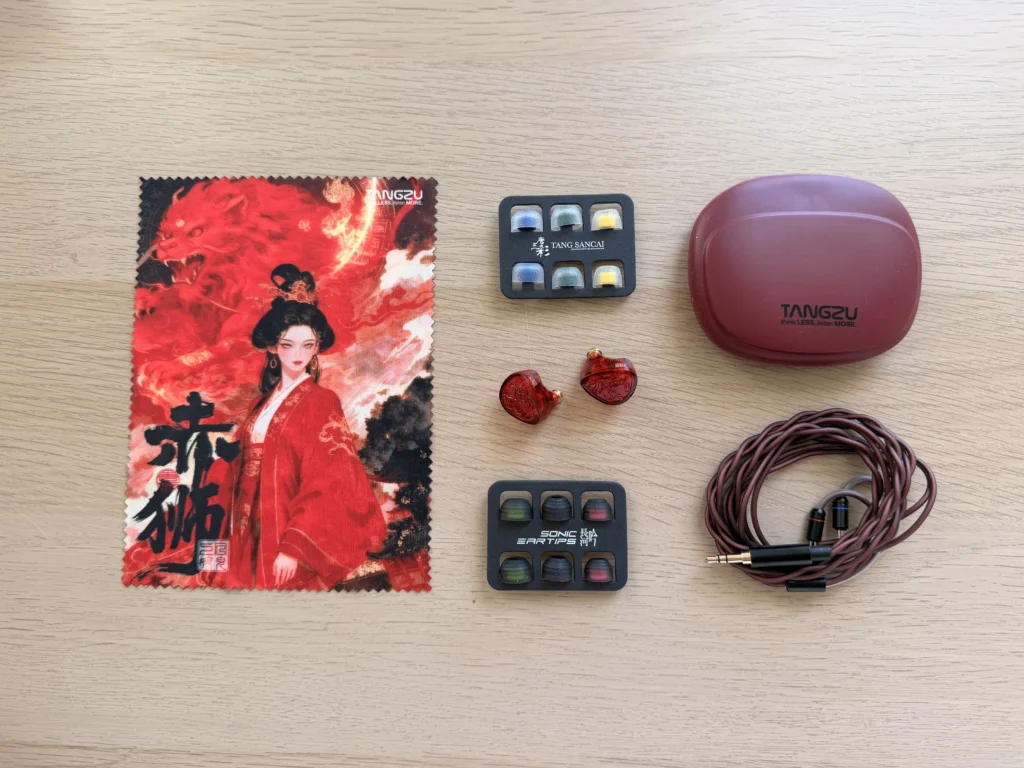
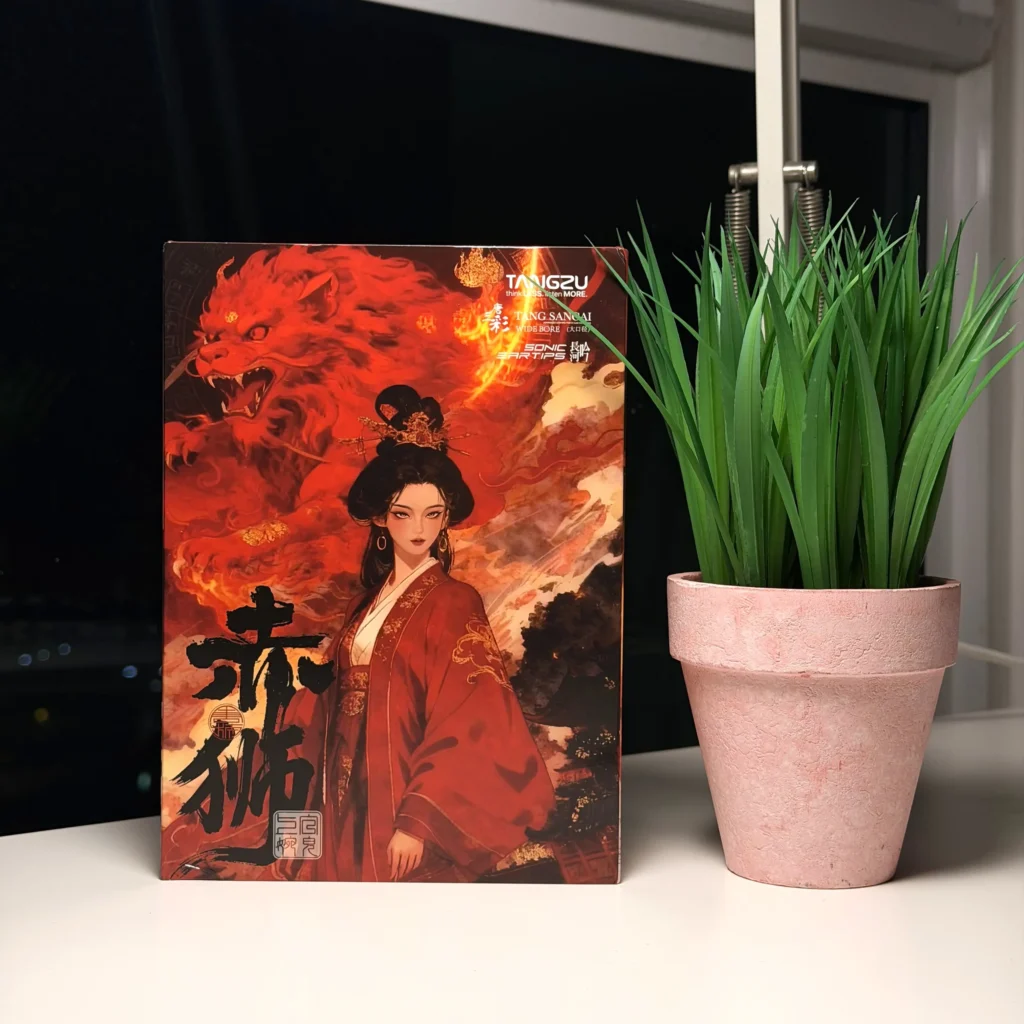
Tangzu continues to impress with their packaging quality. Even at this budget price point, the unboxing experience feels premium and thoughtful. Every detail shows care and attention that’s rare in the sub-$30 category.
The Red Lion Edition comes named after Shangguan Wan’er, a female official and poet from Chinese history. This cultural connection adds depth to what could have been just another color variant.
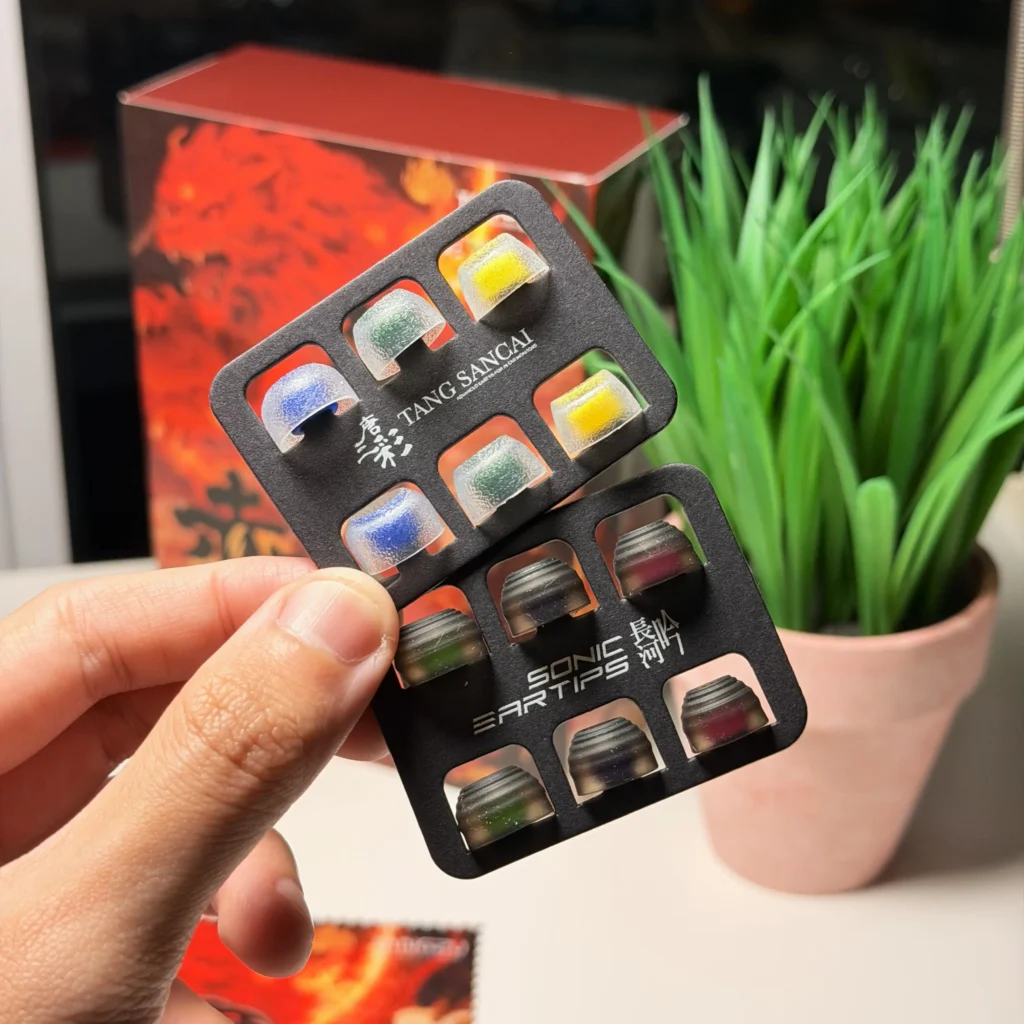
Inside the box you’ll find the IEMs themselves, a quality cable, multiple eartip options including the new Sancai variants, and documentation. TangZu includes two types of eartips that significantly alter the sound signature, which I’ll discuss later in detail.
Design and Build Quality
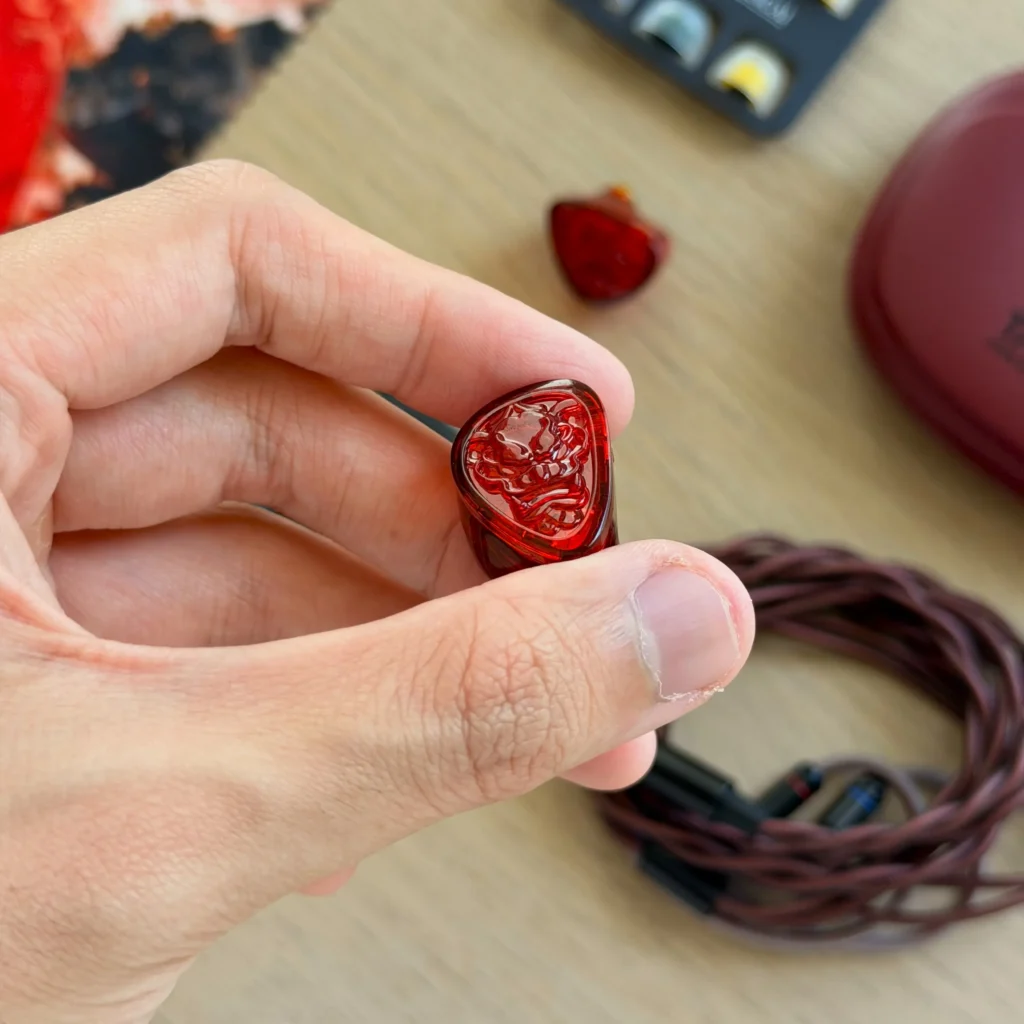
The aesthetic appeal of the Red Lion Edition is immediately striking. The shells are constructed from red PET material that genuinely resembles the texture of jade stones. The translucent quality catches light beautifully and gives the IEMs a premium appearance that belies their budget pricing.
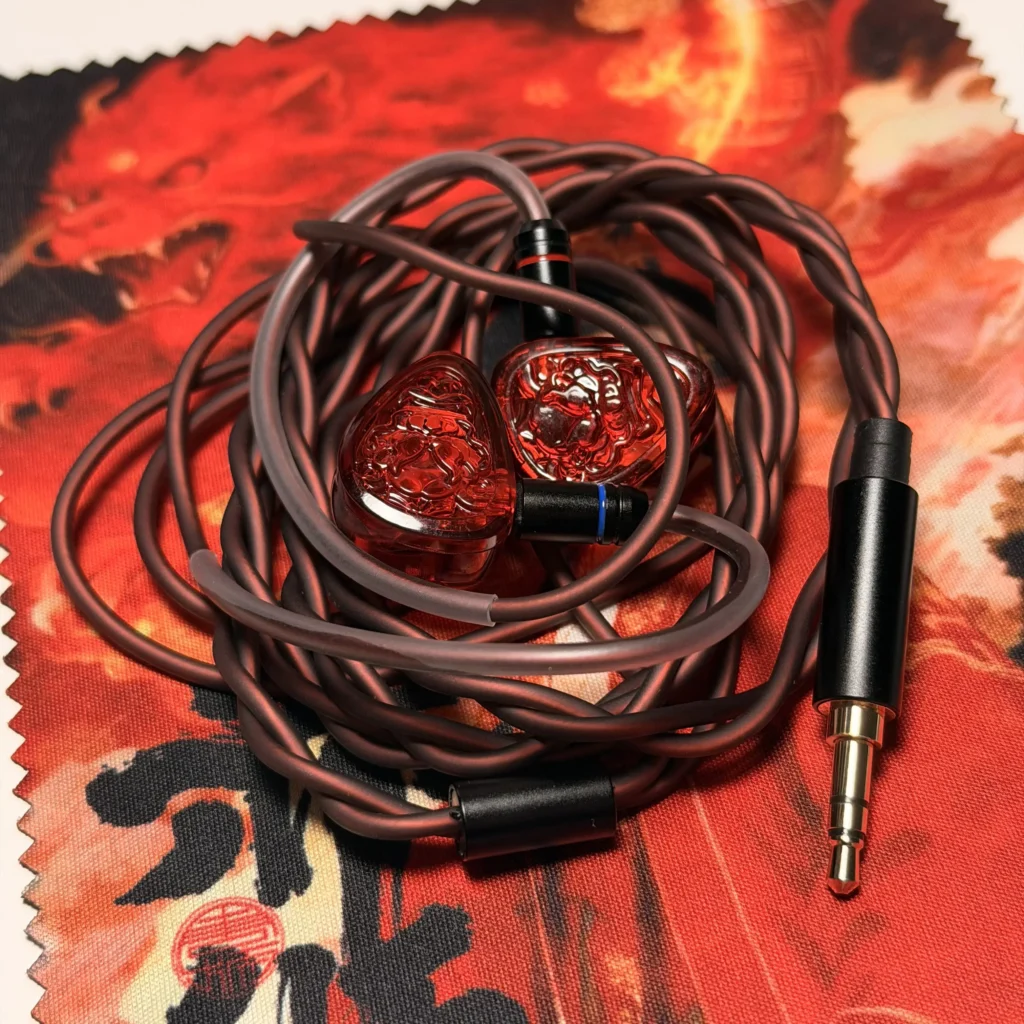
The cable deserves special mention. It’s a 2-core OFC construction wrapped in a maroon sleeve with a smoky matte finish that feels pleasant to hold. The cable quality exceeds expectations for this price bracket and looks more expensive than it is. The connector housings and jack are well finished without sharp edges or visible flaws.
Shell design follows an ergonomic shape that TangZu has refined over their Wan’er iterations. The nozzles are angled appropriately for comfortable insertion and the overall size isn’t overly large. Build quality feels solid though obviously not at the level of multi-hundred dollar IEMs. For daily use and reasonable care, these should hold up well.
Fit and Comfort
Fit is very good across the board. During my 2 to 3 hour listening sessions, I experienced no discomfort whatsoever. The shells nestle into the ear concha naturally without creating pressure points. The lightweight construction helps with long term wearability.
The nozzle length and angle work well for most ear shapes. I found the stock eartips provided good seal and isolation, though as always, eartip selection remains personal. TangZu includes multiple sizes to help you find the right fit.
Isolation is adequate for commuting and general use, though these aren’t designed to block out extremely loud environments. The semi-open nature of the design provides some venting which actually helps with comfort during extended sessions.
Sound Quality
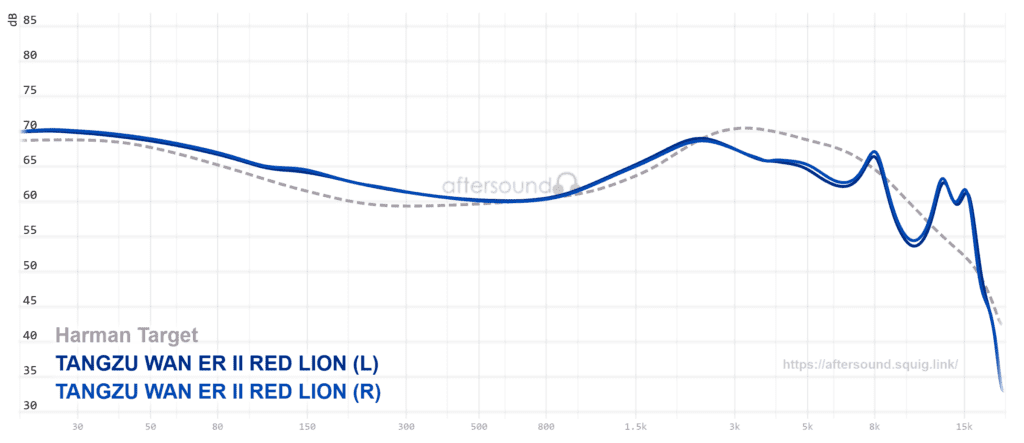
You Can See the sound profile of tangzu wan’er 2 red lion graph, as compared with the Harman target. The Red Lion Edition is immediately bassier than previous Wan’er versions. The tuning is U-shaped with elevated bass and treble, while the midrange stays warm and slightly recessed. This isn’t a reference monitor but an enjoyable daily driver that goes for fun over pure accuracy. The warm tonality defines everything, giving music a richer and more colored feel that works great for relaxed listening.
Bass
The bass is where the Red Lion really shows its strength. This is fierce, powerful low end that satisfies across different music styles.
Sub-bass has solid rumble with good depth. It’s not the deepest you’ll hear but it provides enough weight for electronic music and hip-hop. The rumble feels satisfying without being overwhelming.
Mid-bass is where things get better. There’s strong punch here with nice texture. Kicks sound saturated and organic with a rustic quality that feels natural. The definition is better than the sub-bass, giving you clear separation between different bass notes.
Lower bass provides good bounce and keeps bass lines defined rather than letting them blur together. The bass adds warmth to the overall sound but stays controlled enough to avoid sounding muddy. There’s actual texture here, not just boom, which helps the bass feel engaging rather than bloated.
Midrange
The midrange presents a warm, musical character. Everything sounds richer and fuller here, which is great for some genres but might feel less clean if you prefer neutral sound.
The lower midrange connects with the bass, making instruments in that range sound thick and full. Strings get lush body, woodwinds take on appealing warmth, and pianos have real weight. Jazz and soul tracks sound particularly good with this dreamy, caressing warmth that pulls you into the music.
Hip-hop works well too. Testing J. Cole’s “Run A Train” showed good energy in the samples and midrange elements. The warmth doesn’t kill the punch, it just adds character.
Vocals show both good and bad here. The warm tonality keeps vocals engaging and laid back in a pleasant way. Male vocals have warmth while female vocals sound smooth. However, there’s some incoherency and slight thinness present. The tonal accuracy isn’t perfect and you might notice vocals feeling slightly disconnected at times. It’s not terrible but it’s there if you’re paying attention. Vocals work fine for casual listening but won’t satisfy people who need perfect vocal reproduction.
Treble
The treble is well-extended and bright but stays smooth enough to avoid fatigue for most people. Upper midrange and treble provide fast, airy response that gives the “Lion” its aggressive character.
Percussions sound assertive and bright with good snap and energy. Cymbals and hi-hats have presence without being harsh. The treble sits right at that edge where it’s exciting and energetic but just avoids crossing into painful territory. If you’re very treble-sensitive you might find it too bright, but most listeners will find it acceptable.
Instruments in this region pop out more and grab attention, creating a slightly holographic feel compared to the warmer mids. Extension is adequate for the price with enough air and sparkle. Some songs might feel like they lack a bit of air but overall the treble keeps things lively and open.
The included Sancai Noble eartips provide the most controlled treble response. With other tips the treble can get a bit more wild.
Soundstage
Soundstage dimensions are decent with some interesting characteristics. Width and depth are about what you’d expect for the price, providing reasonable spatial spread without approaching the expansiveness of higher-end IEMs.
Height presents above average for the price bracket. The stage extends upward more than many competitors, which adds to the sense of space and air. This vertical dimension helps prevent the sound from feeling too confined.
The semi-open design with venting likely contributes to the more open presentation compared to fully sealed budget IEMs. While not vast, the soundstage never feels cramped or claustrophobic.
Imaging and Separation
Imaging shows variable performance depending on frequency range. In the midrange, the warm and rich presentation creates some ambiguity. The saturated ambience makes precise placement slightly less defined. However, this isn’t necessarily a flaw, it’s part of the intentional laid-back character.
In the upper midrange and treble, separation and imaging become more solid. You can place percussion and high frequency elements with better accuracy. The brighter tuning up top helps elements stand out more distinctly from each other.
Instrument separation in busy passages is adequate but not exceptional. Complex orchestral arrangements or dense mixes can get a bit congested in the mids. However, for typical listening with modern recordings, separation holds up reasonably well.
Detail Retrieval
Detail retrieval aligns with price expectations. This isn’t a detail monster by any means, but it provides satisfying resolution for casual and musical listening.
Macro details dominate the experience, especially in the midrange. Broad strokes and main elements come through clearly. You hear the general character and texture of instruments well.
Micro details pop out occasionally in the upper midrange, providing needed flair and interest. Small cymbal decays, breath sounds, and subtle articulations make appearances but aren’t the focus of the presentation.
The warm tuning naturally emphasizes smoothness over ultimate detail extraction. If detail retrieval is your primary concern, more neutral budget options might serve better. But for enjoying music with good texture and character, the Red Lion provides satisfying performance.
Tangzu Wan’er 2 Red Lion Gaming Performance
For gaming use, the Red Lion performs adequately though it’s not optimized for competitive play.
Positional audio works reasonably well thanks to the decent imaging in the treble region. You can locate enemy positions in shooters with acceptable accuracy, though not at the level of IEMs specifically tuned for gaming.
Footsteps come through with reasonable clarity, aided by the upper midrange presence. However, the warmer bass can occasionally obscure some low frequency footstep cues depending on the game’s sound design.
Immersion is good due to the engaging sound signature. Single player games and story-driven experiences benefit from the musical tuning. The soundstage provides adequate space for environmental sounds.
Voice chat works fine with the included microphone on some cable variants. Communication clarity is sufficient for team coordination.
Overall, these work for casual gaming but competitive players might prefer something with more midrange clarity and less bass warmth.
Tangzu Wan’er 2 Red Lion vs Tangzu Wan’er SG
If you’re familiar with previous Wan’er versions, here’s how the Red Lion differs:
Bass: Significantly more present on the Red Lion with better impact and rumble. Original is more neutral and balanced.
Midrange: Red Lion has warmer, richer mids with more color. Original maintains better accuracy and neutrality.
Treble: Both have energetic treble but Red Lion pairs it with warmer mids creating more contrast. Original feels more cohesive.
Overall character: Original Wan’er prioritizes balance and neutrality. Red Lion prioritizes engagement and musicality with a more colored, fun presentation.
Who should choose Red Lion: Those wanting more bass, richer tone, and more exciting sound. Listeners who found the original too neutral or boring.
Who should choose Original: Those wanting accurate, neutral sound for analytical listening or studio monitoring on a budget.
Also Check | 🎧 Tangzu Wan’er 2 Review: A Big Step Up from Wan’er SG 1?
Who Should Buy the Tangzu Wan’er 2 Red Lion
Perfect For:
- Budget buyers wanting engaging, musical sound under $25
- Bass lovers who still want some control and texture
- Fans of warm, smooth tonality for long listening sessions
- Instrumental music listeners who enjoy rich, colored presentation
- Hip-hop, EDM, jazz, and soul genre enthusiasts
- Anyone wanting premium aesthetics at budget pricing
Not Ideal For:
- Vocal purists who demand perfect accuracy
- Those wanting neutral, reference-level sound
- Treble-sensitive listeners even though it’s not harsh
- Competitive gamers needing maximum clarity
- Listeners who prefer lean, analytical presentations
Tangzu Waner 2 Red Lion Bass Edition Review
The Tangzu Wan’er 2 Red Lion Edition succeeds in its mission to create a more engaging, bass-forward version of the Wan’er formula. It catches your eye first with beautiful aesthetics and premium presentation, then catches your ears with strong bass, musical mids, and energetic treble.
This isn’t the most technical or accurate IEM at any price, but technical perfection isn’t the goal here. The goal is enjoyment and engagement, which the Red Lion delivers consistently. The warmer tonality creates a smooth, inviting sound that works wonderfully for relaxed listening sessions.
The vocal inaccuracies prevent this from being a perfect all-rounder, and the warm midrange won’t suit everyone’s tastes. But for the target audience seeking fun, musical sound with good bass at an incredible price, the Red Lion delivers excellent value.
At $23, you get legitimate build quality, beautiful design, a premium cable, useful eartip options, and a sound signature that prioritizes enjoyment over analysis. That’s an impressive package that earns a strong recommendation for the right listener.
If you want more excitement and engagement than the neutral original Wan’er provides, the Red Lion Edition is absolutely worth considering. Just understand what you’re getting: a warm, bass-forward, musical IEM that sacrifices some accuracy for pure listening enjoyment.
How does the Tangzu Wan’er 2 Red Lion compare to the original Wan’er?
The Red Lion features significantly more bass presence with a warmer, U-shaped tuning compared to the neutral original. It has richer, more colored midrange and pairs energetic treble with the warmer mids for a more engaging but less accurate sound. Choose Red Lion for fun and musicality, choose original for neutrality and accuracy.
Is the bass on the Wan’er 2 Red Lion too much for balanced listening?
The bass is elevated but not overwhelming. It provides strong impact and rumble with good texture and control. It’s not for hardcore bassheads wanting extreme quantities, nor is it neutral. The bass adds warmth and body without becoming muddy or bloated. If you enjoy modest bass boost with some control, it works well.
What music genres work best with the Red Lion Edition?
The warm, bass-forward tuning excels with hip-hop, EDM, jazz, soul, and instrumental music. The rich midrange particularly benefits acoustic instruments like strings, woodwinds, and piano. Rock and electronic genres also perform well. Vocal-focused music might reveal the slight inaccuracies more clearly, though it’s still enjoyable for casual listening.
Do the different included eartips really change the sound?
Yes, the eartip selection meaningfully affects the presentation. The Sancai Wide Bore opens up the midrange and adds treble brightness. The Sonic tips provide similar brightness with more air. The Sancai Noble Brass Edition offers the most controlled treble with best dampening. Trying all options helps you tune the sound to your preference.
Is the Tangzu Wan’er 2 Red Lion good for gaming?
The Red Lion works adequately for casual gaming with decent positional audio and immersive sound. However, the warm bass can occasionally obscure footsteps, and the colored midrange isn’t optimized for competitive play. Single-player and story-driven games benefit from the engaging tuning, but serious competitive gamers should consider alternatives with more midrange clarity.