The GK Kunten IEM has been getting massive hype lately on reddit and many of you requested this review. At just ₹1000, this budget IEM has caught everyone’s attention. If you didn’t know, GK is actually a sub-brand of KZ, the company that’s been making budget audio products for years. What makes the Kunten interesting is that people claim it uses the same driver found in the much more expensive KZ Zenith which costs around 4 times more.
So is this really as impressive as the internet hype suggests or just another overhyped budget product? I tested this IEM with different music genres, tried it Gk Kunten gaming sessions, and compared it against other options in this price range. Let me share what I found after extensive real world testing.
Table of Contents
GK Kunten Specifications:
| Specification | Details |
|---|---|
| GK Kunten Price | ₹900 – ₹1200 |
| Driver | 10mm Dynamic Driver |
| Frequency Response | 20Hz – 40,000Hz |
| Impedance | 43 Ohms |
| Sensitivity | 109dB |
| Cable | Silver OFC Detachable |
| Connection | 0.78mm 2-Pin |
| Design | Semi-Open Back with Grills |
| Available Variants | 3.5mm / Type-C, With/Without Mic |
Quick Verdict
Rating: 4/5
The GK Kunten delivers genuinely impressive performance at the ₹1000 price point. You get sub-bass focus with good texture, forward mids that bring vocals to life, and acceptable treble extension that won’t fatigue most listeners. The build quality is decent with lightweight 3D printed shells and a metallic faceplate that fits comfortably for long sessions. Cable quality is standard KZ fare and the microphone works surprisingly well for calls and gaming.
However, upper mids can get shouty on certain tracks and treble-sensitive users might find the brightness excessive. The imaging and instrument separation punch well above the price class making it excellent for gaming where footsteps remain clear. If you want a fun sounding budget IEM for casual listening, music enjoyment, and gaming, the GK Kunten is highly recommended and lives up to most of the hype.
What’s in the Box
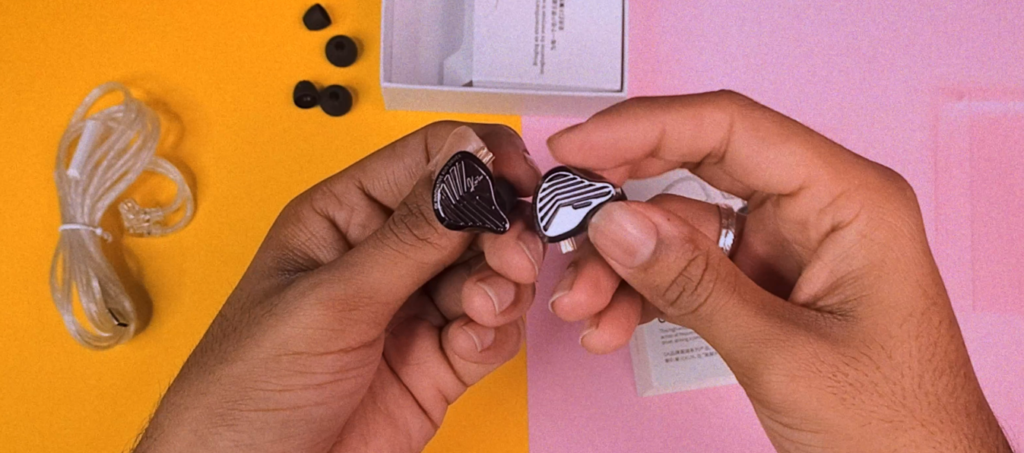
The packaging follows typical KZ minimalist style. Opening the box you get:
- IEM shells with left and right clearly marked
- Silver OFC detachable cable (either 3.5mm or Type-C depending on variant)
- KZ Starline stock eartips in multiple sizes
- Basic user manual
The accessory package is minimal but fair for the price. One thing worth mentioning is that the stock eartips might not give everyone a perfect seal, so you may need to experiment with aftermarket tips for optimal sound quality and isolation.
Build Quality and Design

The GK Kunten uses an interesting approach to keep costs down while maintaining decent quality.
Shell Construction: The shells are made from 3D printed resin which keeps them lightweight. This manufacturing method is cost effective but the shells still feel surprisingly durable for daily use. The shape is ergonomic with smooth edges and no sharp corners that could cause discomfort.
Faceplate: The metallic faceplate looks good and features an open grill design. These grills are not just decorative, they actually function as air vents creating a semi-open back design. This helps relieve internal pressure and gives the soundstage a slightly wider feel compared to completely sealed designs.
Also See | Audiocular M302 Review
Weight: The weight distribution is excellent. Since the shells are lightweight, you can wear them for hours without fatigue. There are no pressure points even after extended listening sessions.
Nozzle: The nozzle is perfectly angled for natural ear canal insertion. The bore size is medium, neither too wide nor too narrow, which gives good compatibility with different eartip types.
Durability: While the resin shells are strong enough for normal use, they’re obviously not as indestructible as metal shells would be. Handle them with reasonable care and they should last well.
Cable Quality and Microphone
Cable Build: The stock cable is the typical KZ/GK silver OFC cable we’ve seen on their products. It’s functional and the detachable 2-pin design means you can replace or upgrade it in the future.
Cable Handling: To be honest, the cable is a bit stiff and retains memory, meaning it tangles more easily than softer cables. The transparency looks premium and you can see the chip inside, but handling could be smoother.
Type-C Port: On the Type-C variant, the port feels surprisingly durable. The connection is solid without wobbling, which is sometimes an issue on budget IEMs.
Microphone Performance: The mic-equipped variant has decent mic quality for calls, voice chats and gaming communications. Background noise rejection is acceptable and voice clarity is sufficient for daily use. It’s not professional recording quality but it’s more than adequate for casual usage.
Fit and Comfort
Initial Fit: When you first put them on, the fit feels quite natural. The shells are ergonomically designed to nestle properly in the ear concha without requiring excessive insertion depth.
Long Sessions: This is where the GK Kunten really shines. The lightweight shells and smooth design mean you can use them for 4-5 hours continuously without fatigue. They fit so well in the ears that you barely notice you’re wearing them.
Nozzle Fit: The nozzle points perfectly into the ear canal without causing discomfort. Users with different ear sizes should experiment with the different eartip sizes to find the optimal seal.
No Sharp Edges: There are no sharp edges or pressure points that cause irritation, which is often a problem with budget IEMs.
Noise Isolation: With a proper eartip fit, isolation is quite decent. For outdoor use, commuting and noisy environments, you get sufficient isolation from background noise. Deeper insertion improves isolation further.
During Movement: The fit stays stable during light physical activity and walking. They’re not designed for heavy workouts or running obviously, but for normal movement there are no issues.
Gk Kunten Sound Quality
Let me break down how the GK Kunten actually sounds across different frequencies.
Bass Response:
The bass is sub-bass focused which gives it a different character compared to mid-bass heavy IEMs.
Sub-Bass: There’s solid rumble and extension in the sub-bass region. Electronic music, hip-hop and tracks with deep bass notes really come alive. The rumble feels satisfying without being overwhelming.
Mid-Bass: The mid-bass has good punch but isn’t as emphasized as the sub-bass. This tuning choice keeps the bass from bleeding into the mids.
Bass Texture: The bass doesn’t sound muddy at all. There’s decent texture and you can distinguish different bass notes clearly. For a single dynamic driver at this price, the bass control is impressive.
Bass Quantity: It’s not for hardcore bassheads who want massive quantities of bass. The focus is on quality and control rather than pure quantity. If you want skull-rattling bass, look elsewhere.
Midrange Performance:
The mids are slightly forward in the mix which brings vocals and instruments to the front.
Vocal Clarity: Vocals come through clearly without being drowned by the bass or treble. Both male and female vocals have good presence in the mix.
Male Vocals: Male vocals have warmth and body. They sound natural and engaging without sounding thin or hollow.
Female Vocals: Female vocals have a smooth quality that’s quite pleasant. However, on certain tracks the upper mids can get shouty or harsh depending on the recording quality and mastering.
Genre Performance: Rock and rap sound particularly good on these. The forward mids bring energy to guitars and vocal performances.
Upper Mids Issue: The shouty upper mids on some songs can be fatiguing. This isn’t constant but it’s worth noting if you listen to a lot of bright recordings.
Treble Performance:
The treble is well-extended but tuned to be smooth rather than overly analytical.
Extension: Treble extends well enough to give you detail without being harsh. Cymbals, hi-hats and high frequency details come through clearly.
Smoothness: The treble is smoother than many budget IEMs which makes long listening sessions more comfortable. You won’t get ear fatigue quickly.
Air: On some songs the treble can lack a bit of air and sparkle. It’s not the most airy or spacious treble presentation.
Treble Sensitivity: If you’re treble-sensitive, you might find the upper frequencies a bit bright. Most people will find it acceptable but it’s something to consider based on your preferences.
Soundstage and Imaging:
For the price, the technical performance is surprisingly good.
Instrument Separation: The separation between instruments is better than expected at this price point. You can distinguish different elements in the mix fairly easily.
Imaging: The imaging is quite accurate. You can locate where different instruments are positioned in the stereo field. For budget IEMs, this level of imaging precision is rare.
Soundstage Width: The soundstage feels wider than typical closed-back designs, likely due to the semi-open back design with the vented grills.
Spatial Feel: Overall the spatial presentation is better than most competitors in this price range. Music doesn’t feel cramped or congested.
GK Kunten Gaming Performance:
Since many of you use IEMs for mobile gaming, here’s how they perform.
Footstep Clarity: The reduced mid-bass keeps footsteps clear and easy to hear. In competitive shooters, you can locate enemy positions fairly accurately.
Directional Audio: The good imaging translates well to gaming. You can tell which direction sounds are coming from with reasonable accuracy.
Voice Chat: If you have the mic variant, voice communication quality is good enough for team coordination.
Gaming Value: For the price, these are very good for gaming. You get better spatial awareness than most gaming earbuds in this range.
Who Should Buy GK Kunten
Perfect For:
- Budget buyers wanting good sound quality under ₹1200
- Casual listeners who enjoy forward vocals
- Mobile gamers needing clear footsteps and good imaging
- Users wanting comfortable lightweight IEMs for long sessions
- People exploring IEMs for the first time
- Those who prefer sub-bass over mid-bass
Not Ideal For:
- Hardcore bassheads wanting massive bass quantity
- Treble-sensitive listeners who prefer darker sound signatures
- Users needing premium cable quality out of the box
- Those wanting perfectly smooth upper mids without any shoutiness
- People needing heavy workout durability
GK Kunten IEM review:
The GK Kunten is a solid all-rounder budget IEM that offers sub-bass focus, forward mids, and impressive imaging and separation for the price. At ₹1000, it delivers genuine value and punches above its weight class in several areas.
The main strengths are the comfortable fit, decent build quality, good bass texture, clear vocals, and surprisingly good technical performance for gaming and music. The semi-open design adds to the soundstage width.
The weaknesses include occasional upper mid shoutiness, potential treble brightness for sensitive listeners, and standard KZ cable quality that could be better.
If you’re looking for a decent option for fun casual daily listening and don’t need extreme bass or perfectly smooth sound, the GK Kunten is worth considering. It’s one of the better options at this price point and the hype is mostly justified.
GK Kunten FAQ:
Is GK Kunten good for bass?
Yes, GK Kunten delivers good sub-bass with solid rumble and texture. The bass is controlled and textured, ideal for quality over quantity. However, hardcore bassheads wanting extreme bass should look for bass-boosted alternatives as this focuses on balanced performance.
How is GK Kunten for gaming?
GK Kunten is very good for gaming at this price point. The reduced mid-bass keeps footsteps clear, and the good imaging helps with directional audio cues. For competitive mobile gaming like PUBG or Call of Duty Mobile, it offers better spatial awareness than most budget options. The mic quality is also decent for voice chat.
Can I use GK Kunten for long listening sessions?
Yes, the lightweight design and comfortable fit make them excellent for long sessions. Most users can wear them for 4-5 hours without fatigue. However, if you’re very treble-sensitive, the brightness might cause some fatigue over extended periods depending on volume levels.
Is GK Kunten worth it at ₹1000?
Yes, GK Kunten offers genuine value at ₹1000. The sound quality, comfort, and technical performance punch above the price class. While it has some weaknesses like upper mid shoutiness and standard cable quality, the overall package is competitive and worth the price for budget buyers.