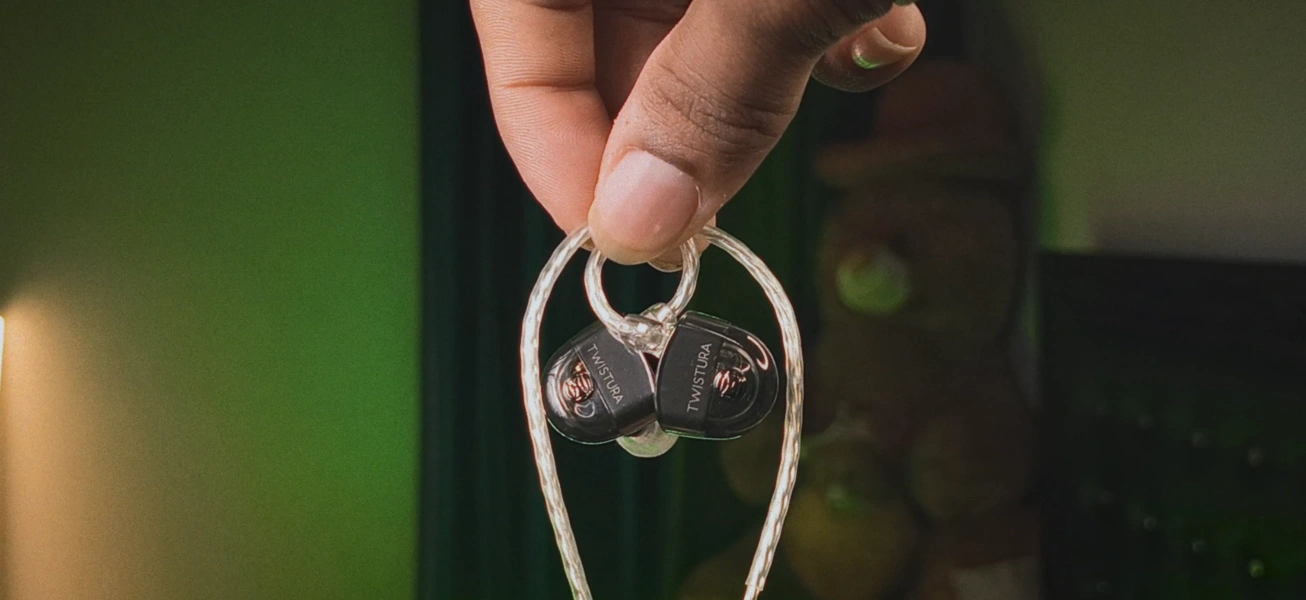
The budget IEM market is crowded, but somehow the Twistura D Minor has flown under the radar for the past year. At $31.90, this single dynamic driver IEM doesn’t promise exotic multi-driver setups or elaborate technical wizardry. Instead, it focuses on practical everyday listening with a straightforward 10mm dual magnetic dynamic driver housed in a comfortable shell.
What makes this interesting is the sheer amount of accessories included. You get three different tuning nozzles, a massive selection of eartips, and even a USB-C audio dongle in the box. For someone curious about experimenting with sound signatures or just starting the hobby, this level of customization at this price point is genuinely unusual.
After living with the Twistura D Minor for the past month, I think it’s been unfairly overlooked. The competition at this price is fierce, but the combination of warm tuning, tuning flexibility, and generous accessories makes this a fun purchase worth considering.
Table of Contents
Twistura D Minor Specifications
| Specification | Details |
|---|---|
| Price | $31.90 USD (₹2,650 approximately) |
| Driver | 10mm Dual Magnetic Dynamic Driver |
| Diaphragm | LCP Dome Composite Material |
| Impedance | 30Ω ±3 (@1kHz) |
| Sensitivity | 108 dB/Vrms (@1kHz) |
| Frequency Response | 15Hz – 37kHz |
| Cable Connection | 0.78mm 2-Pin Detachable |
| Plug Type | 3.5mm Stereo Single-Ended |
| Included Accessories | 3 Tuning Nozzles, Multiple Eartips, USB-C Dongle |
Performance Ratings
Design & Aesthetics: ⭐⭐⭐⭐ (4/5)
Build Quality: ⭐⭐⭐½ (3.5/5)
Sound Quality: ⭐⭐⭐⭐ (4/5)
Gaming Performance: ⭐⭐⭐½ (3.5/5)
Soundstage & Imaging: ⭐⭐⭐⭐ (4/5)
Value for Money: ⭐⭐⭐⭐⭐ (5/5)
Quick Verdict
The Twistura D Minor offers exceptional value at $32 with its generous accessory package and tuning flexibility. The 10mm dual magnetic dynamic driver delivers a balanced to slightly warm sound signature that prioritizes comfort and listenability over technical fireworks. With three tuning nozzles (Red, Black, Blue) providing variations on a warm easygoing sound, plus a huge eartip selection and USB-C dongle included, this is an excellent second IEM for experimentation or a safe first choice for newcomers. The tuning won’t suit bassheads or those wanting aggressive V-shaped sound, but for daily listening across folk, classic rock, indie, and vocals, it’s a reliable performer that avoids fatigue. At this price, the combination of sensible tuning, comfort, and customization options makes it highly recommended.
Unboxing and What’s in the Box
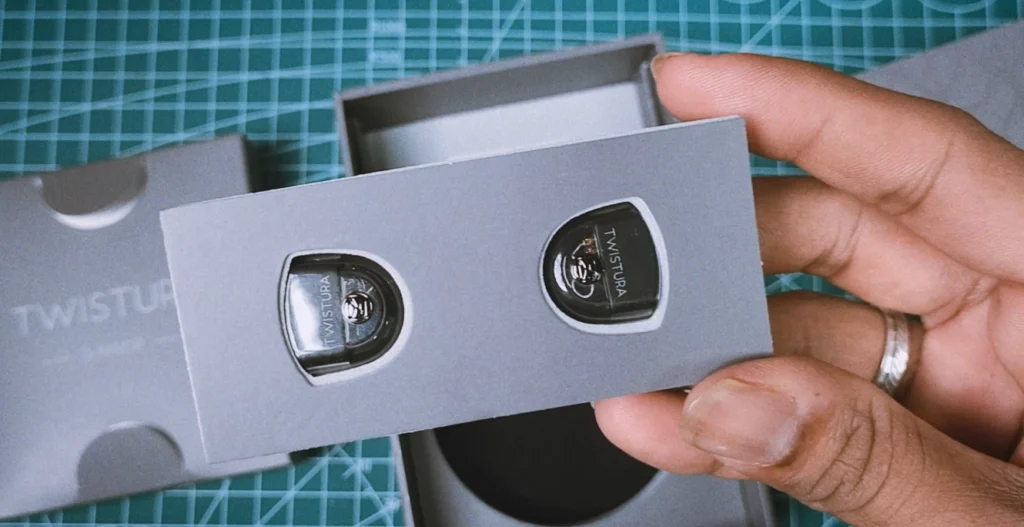
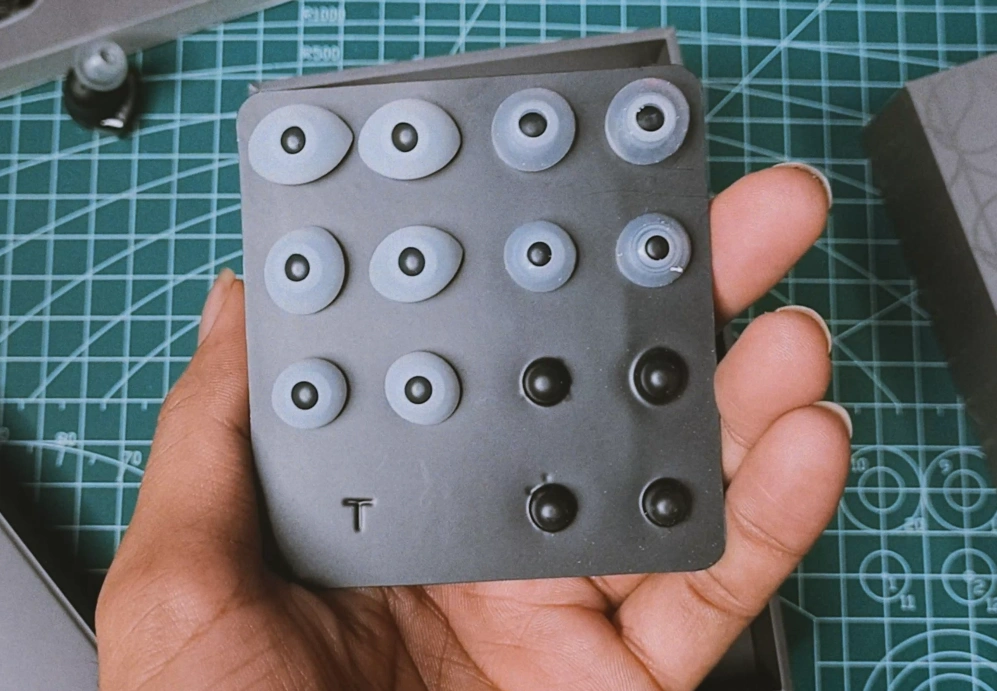
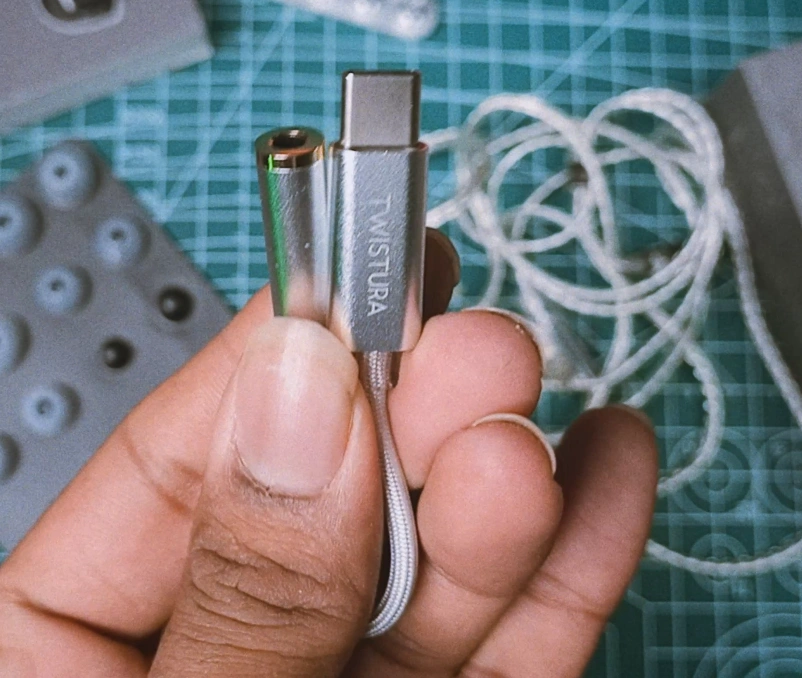
The packaging is clean and minimal without unnecessary frills. The box itself is straightforward with frequency response graphs printed on the back, giving you a preview of what to expect sonically.
Opening the box reveals a well organized layout with the IEMs front and center, cable stored underneath, and accessories neatly arranged. For a $32 product, the presentation feels thoughtful.
Complete Package Contents:
- Twistura D Minor IEM shells (Left and Right marked)
- Detachable 0.78mm 2-pin cable with 3.5mm plug
- Very large selection of eartips in various sizes and bore widths
- USB-C audio dongle
- Three tuning nozzles (Red, Black, Blue)
- Documentation and warranty information
The inclusion of the USB-C dongle genuinely adds value to this offering. It’s something I wish more budget IEMs would provide. While it doesn’t support PEQ or advanced features, having a basic dongle included means you can start listening immediately even if your phone lacks a headphone jack. At this price point, asking for PEQ would be unrealistic.
Design and Build Quality
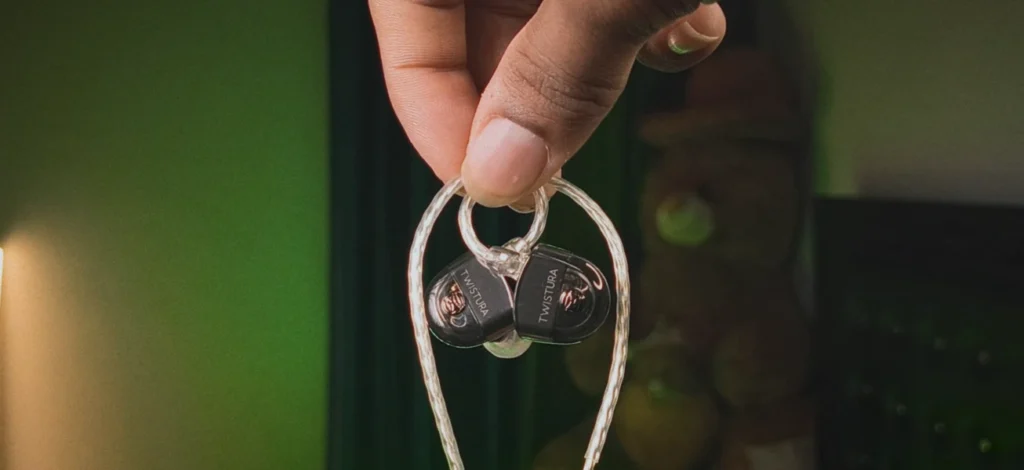
The IEM shells have a distinctive appearance that stands out in a good way. The clear plastic construction is unusual but executed well, letting you glimpse the internal components which adds visual interest.
The shell shape is ergonomic with smooth contours. There’s nothing sharp or uncomfortable about the design. The clear plastic feels solid enough for daily use though obviously it’s not premium metal construction. For the price, the build quality is appropriate.
The faceplates have an interesting texture and finish that catches light nicely. The overall aesthetic is unique without being gimmicky or cheap looking.
Cable Quality: The included cable is just okay, which is what you should expect at this price. It’s a standard 0.78mm 2-pin connector, so you can easily swap to a different cable if you want to upgrade later. The 3.5mm plug is properly terminated, the chin splitter works fine, and the cable doesn’t tangle excessively. It’s functional rather than impressive.
The advantage of the standard 2-pin connection is future flexibility. As you explore the hobby, you can upgrade the cable without replacing the entire IEM.
Nozzle System: The tuning nozzles are a standout feature at this price. Having three different tuning options is extraordinary in the $30 range. The nozzles screw on securely and feel durable enough to handle regular swapping. Each nozzle is clearly marked with its color (Red, Black, Blue) making identification easy.
Fit and Comfort
The shell has a distinctive shape that works well for most ears. However, achieving the perfect seal requires some experimentation with the included eartips.
In my experience, the default tips didn’t quite achieve a perfect seal initially. As a result, the bass impact was lighter than expected at first. But with the generous assortment of tips in the box, you can experiment to find the right combination of bore size and material for your ear shape.
The eartip selection is genuinely excellent, especially at this price point. You get multiple sizes, different bore widths, and varying heights. This variety means most people should find something that works.
I personally settled on the larger bore, taller tips for my listening tests. These provided a good balance between size and shape and gave me the bass presence I was looking for. If you still struggle with the included tips, it’s worth trying third-party options. While I like the shell design overall, a longer eartip can help with certain ear shapes.
Once you find the right tip, comfort is very good. The shells are lightweight and the shape distributes pressure evenly. I wore these for 2-3 hour sessions without any discomfort or fatigue. The lightweight construction means you barely feel them after a while.
Understanding the Tuning Nozzles
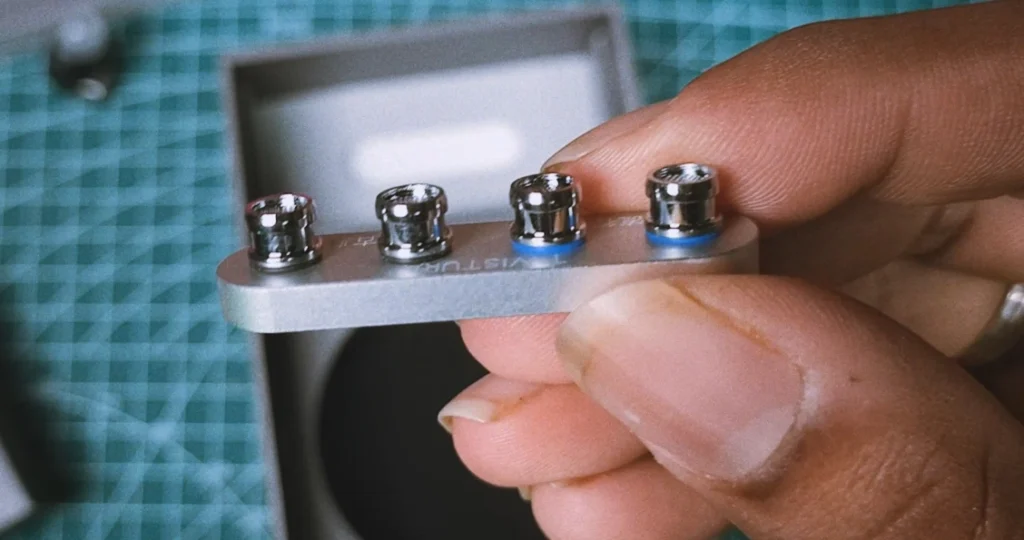
The three included nozzles provide different takes on a warm, easygoing foundation. None of them radically transforms the IEM into something completely different, but each offers a distinct flavor.
Red or Black Nozzle
These two provide excellent takes on a warm-neutral balance. You get fuller low end, natural midrange, and relaxed treble. The difference between Red and Black is subtle, with Red providing slightly more bass emphasis. Both maintain a cohesive, balanced sound that works across many genres.
Blue Nozzle
The Blue nozzle adds extra upper-treble sparkle and turns the set into a more fun, slightly V-shaped listen. If you find the Red/Black too laid back or want more energy up top, the Blue nozzle provides that boost without becoming harsh.
Quick Suggestion for Newcomers: If you’re just starting in the IEM hobby, I’d recommend buying a conventionally tuned baseline first, something like the Truthear Zero Red (or Gate) or Tanchjim Zero. Then circle back to this model when you’re ready to play with tip and nozzle swaps. The low price and generous accessories make the D Minor a fun second IEM to learn on and experiment with tuning variations.
At this price, you don’t get app features or DSP, and that’s fine. The goal here is a consistent, reliable baseline tuning that works out of the box with enough flexibility to explore your preferences.
Sound Quality
The D Minor presents a balanced to slightly warm tonality with a gentle bass lift, natural mids, and polite treble. It’s an easy listen that steers clear of shout and fatigue. This is clearly tuned for long-term comfort and enjoyment rather than wow factor or technical showcase.
Bass
The low end walks a pleasing line between presence and restraint. There’s a mild mid-bass rise that fills out drums and bass guitars without tipping into bloom. The sub-bass reaches low enough to give electronic and cinematic cues a convincing foundation for a single dynamic driver in this price bracket.
Impact is clean rather than blunt. Kick drums start and stop promptly, and basslines retain their shape even as arrangements get busier. On James Blake’s “Limit to Your Love,” the D Minor renders the famous bass swell with measured rumble. You feel the note pressurize the space without it masking the vocal or turning the rest of the track soft.
The set prioritizes definition over sheer slam, so you get good note edges and a tidy response. This is more about articulation and control than chest-thumping excess. If you’re a basshead wanting massive quantities, this won’t satisfy you. But if you want bass with texture and definition that complements the music rather than dominating it, the D Minor delivers.
The measurements show the sub-bass rolls off a bit, so I wouldn’t recommend this for bass-heavy genres like EDM or trap where deep sub-bass extension is critical. For folk, classic rock, indie music, and vocals, this will be a very pleasant listening experience. The mid-bass might bleed slightly into the midrange on some tracks, adding warmth but occasionally reducing absolute clarity.
Midrange
The mids land naturally with gentle warmth, giving vocals and acoustic instruments believable body while maintaining clarity. There’s enough fill in the lower mids to avoid the papery thinness some budget sets exhibit, yet not so much that arrangements turn thick or hazy.
Male and female vocals sit a touch forward of the band, remaining intelligible even at low volumes. Guitars and piano arrive with timbre that feels familiar and unforced for the price. There’s no weird coloration or honk that makes instruments sound artificial.
Norah Jones’s “Don’t Know Why” is a good test track. Her voice floats just ahead of the instruments, smooth and grain-free, while the accompanying piano has appropriate weight to the left hand and a clean ring to the right. The D Minor keeps sibilants in check and avoids shout through the upper mids, yielding a midrange that’s easy to live with across genres.
The warmth in the lower mids gives everything a slightly cozy character. This works wonderfully for acoustic music, singer-songwriter material, and jazz. It’s less ideal for genres where you want surgical precision and absolute neutrality, but that’s not what this IEM is trying to achieve.
Treble
Treble is polite and purposeful, aiming for long-term comfort rather than showy brilliance. There’s adequate extension to carry air and room cues, but the overall contour smooths splash and edge so that cymbals and strings sound refined instead of brittle.
Detail retrieval is respectable for the tier, presenting micro information without etching. The overall tone avoids sharp peaks that trigger fatigue, making these suitable for all-day listening without causing ear strain.
Steely Dan’s “Aja” showcases cymbal work that’s crisp enough to follow but rounded in its decay. The ride and hi-hat retain texture minus the glare. Trumpet and sax come through with bite where needed yet stop short of piercing, supporting extended sessions where the treble supports the mix rather than stealing the spotlight.
If you’re treble-sensitive, you’ll appreciate this tuning. It never gets harsh or fatiguing. The trade-off is less sparkle and air compared to brighter IEMs, but for relaxed listening this approach works well.
Soundstage and Imaging
Stage size lands in moderate territory, presenting a coherent, stable scene that’s wider than it is deep. What stands out is the tidy organization. Instruments maintain their lanes with convincing center focus, and even when tracks get busier the D Minor resists collapsing into a blur.
Layering isn’t cavernous, but there’s enough front-to-back differentiation to map ensembles without strain. You can follow individual instruments through complex passages without everything mushing together.
On Yosi Horikawa’s “Bubbles,” the left-right pans arc smoothly with clean hand-offs. The percussive transients pop into their positions without smearing into the floor of the mix. Imaging precision is the star here. Objects are easy to point to and follow, making for an engaging listen that favors accuracy and cohesion over artificial expansiveness.
For gaming, this imaging precision translates to good directional cues. You can locate footsteps and environmental sounds with reasonable accuracy. The moderate soundstage won’t give you the vast expansiveness of open-back headphones, but for IEMs at this price the spatial presentation is quite good.
Gaming Performance
The Twistura D Minor works well for gaming, particularly for single-player story-driven experiences where the warm, comfortable tuning enhances immersion without fatigue.
Positional Audio: The imaging accuracy helps with locating sounds in 3D space. In shooters, you can identify enemy positions based on footsteps and gunfire with decent precision.
Footstep Clarity: The mid-bass emphasis means footsteps have good weight and presence. They don’t get lost in the mix during chaotic moments.
Long Sessions: The comfortable fit and fatigue-free tuning make these suitable for marathon gaming sessions. No harshness or pressure points to cause discomfort.
Voice Chat: The warm midrange makes voice communications clear and natural sounding. Teammates sound intelligible without harshness.
For competitive esports where you need maximum clarity and detail, there are better options. But for general gaming where comfort and immersion matter more than competitive edge, the D Minor performs admirably.
Comparison with Competitors
At the $30-35 price point, the D Minor competes against several established options:
vs Truthear Zero Red/Gate: The Truthear options offer more neutral tuning and slightly better technical performance. However, they lack the tuning nozzles and generous accessory package of the D Minor. Choose Truthear for reference sound, D Minor for warmth and flexibility.
Read Here: 7Hz Zero 2 Review: Best Budget IEM Under ₹2,000 in India?
vs Tanchjim Zero: Similar neutral-ish approach to Truthear. The DSP version adds digital tuning flexibility. Tanchjim has cleaner mids but D Minor offers more physical tuning options and better bass texture.
vs KZ/CCA Budget Models: Most KZ/CCA options in this range go for more V-shaped, energetic tuning. The D Minor is more balanced and comfortable for long sessions. KZ might give you more wow factor initially, but D Minor is easier to live with long-term.
The D Minor’s main advantage is the complete package. No other IEM at this price gives you three tuning nozzles, massive eartip selection, AND a USB-C dongle. That value proposition is hard to beat.
Who Should Buy the Twistura D Minor
Perfect For:
- Newcomers wanting a safe, comfortable first IEM
- Budget shoppers who value accessories and flexibility
- Listeners who enjoy warm, easygoing sound for daily use
- People curious about tuning experimentation without spending much
- Folk, classic rock, indie, and vocal music fans
- Those needing comfortable fit for long listening sessions
- Anyone building a collection and wanting variety at low cost
Not Ideal For:
- Bassheads wanting deep sub-bass and massive impact
- Those preferring bright, analytical sound signatures
- Competitive gamers needing maximum clarity and detail
- Listeners wanting cutting-edge technical performance
- EDM and electronic music enthusiasts who need sub-bass extension
Twistura D Minor Review: Final Thoughts
The Twistura D Minor embraces a pragmatic philosophy: keep costs low, comfort high, and tuning sensible. With its simple 10mm dual magnetic dynamic driver design and comfortable fit, it’s an easy recommendation for anyone who wants a reliable budget IEM without the usual compromises.
At $31.90, you’re not just getting an IEM. You’re getting a complete package with three tuning variations, extensive eartip selection for finding the perfect fit, and even a USB-C dongle to start listening immediately. That level of value is genuinely unusual at this price point.
The sound won’t wow you with technical prowess or extreme tuning, but that’s not the point. This is about reliable, comfortable, enjoyable listening that you can tweak to your preferences. It’s about having a sensible starting point that teaches you about the hobby without requiring a major financial commitment.
For ~$32, the D Minor nails the basics: comfort, sensible tuning, detachable cable, and then surprises with the tuning flexibility and accessories. It doesn’t try to be flashy. It focuses on reliability and listenability while giving you room to experiment. At this price, that’s exactly the right approach.
If you’re looking for your first IEM or want an affordable second option for experimentation, the Twistura D Minor deserves serious consideration. It’s been unfairly overlooked, but for those who discover it, it offers exceptional value and a genuinely pleasant listening experience.
FAQs
What makes the Twistura D Minor different from other budget IEMs?
The Twistura D Minor stands out with its complete accessory package at $32. You get three tuning nozzles (Red, Black, Blue) that change the sound signature, an extensive selection of eartips in various sizes and bore widths, and a USB-C audio dongle included in the box. Most budget IEMs provide basic accessories, but the D Minor gives you genuine tuning flexibility and everything needed to start listening immediately.
How do the three tuning nozzles change the sound?
The Red and Black nozzles provide warm-neutral balance with fuller bass, natural mids, and relaxed treble, with Red offering slightly more bass emphasis. The Blue nozzle adds upper-treble sparkle, turning the sound more fun and V-shaped with extra energy up top. The differences are real and audible, giving you three variations on a warm, easygoing foundation without buying multiple IEMs.
Is the Twistura D Minor good for bass lovers?
The D Minor provides quality bass with good texture and control, but it’s not designed for hardcore bassheads. The mid-bass is elevated and punchy, but sub-bass shows some rolloff. It works well for folk, classic rock, indie, and vocals where bass complements rather than dominates. For EDM, trap, or electronic music requiring deep sub-bass extension, you’ll want something with more bass emphasis.
Should beginners buy the Twistura D Minor as their first IEM?
The D Minor works well as a first IEM, but I’d recommend starting with something more conventionally tuned like Truthear Zero Red or Tanchjim Zero to establish a baseline understanding of neutral sound. Then get the D Minor as your second IEM to experiment with tuning variations. The warm sound and tuning nozzles make it an excellent learning tool, but having a neutral reference first helps you understand what the nozzles are actually changing.
Is the Twistura D Minor worth $32?
Yes, the D Minor offers exceptional value at $32. The combination of three tuning nozzles, extensive eartip selection, USB-C dongle, comfortable fit, and sensible warm tuning makes it highly recommended. You’re essentially getting three IEM variations in one package with everything needed to start listening. For budget shoppers or those wanting to experiment with sound signatures, this represents outstanding value.